

Mistakes are just the first half of the story
The more companies I come across the more I observe similar cultural pillars. Take your pick - “obsess over customers”, “move fast”, “act like owners”, “disagree and commit”, “sweat the details”.
To me, these sorts of pillars read like different flavours of “accountability” - how is it that you as an employee can maximize output for the company with minimal required oversight.
What I see far less often, however, is an emphasis on the more human values required to excel - or frankly, even survive - in these high-accountability environments.
Early in my career, I was fortunate to work at Microsoft during Satya Nadella’s shift from a “know-it-all” culture to a “learn-it-all” one. With the support of a fantastic manager, I came to internalize the idea of a growth mindset - one of these human-centered values that I feel has been quietly slipping out of focus elsewhere.
To me - the growth mindset is the notion that we’re never perfect. We always have the opportunity to listen, be empathetic, make mistakes - and, of course, grow.
Despite this experience at Microsoft, I think it’s that middle part - “make mistakes” - that has been the hardest for me to embrace.
Especially as I progress in my career, and my accountability increases, the cost of “making a mistake” seems to grow exponentially - and the number of mistakes I actually see others making appears to decrease similarly.
Of course, some of this is optics - we don’t exactly celebrate making and learning from mistakes in our culture, and we do expect senior folks to make fewer mistakes - or at the least, identify and recover from them much sooner.
Still, I’ve spent a lot of time introspecting - reframing how I think and talk about making mistakes - away from loaded end-of-the-line terms like “failure”, and more towards the idea that mistakes are just the first half of the story.
This past summer, I think the key finally turned in my head and I’d love to share the story with you.
Last year, I spent part of my time leading an AI Research Lab at Plaid - probably one of the most impressive sounding things on my resume, but I promise that the premise was simple. The pace of AI technology was outpacing our ability to keep up. We couldn’t continue to build against our current roadmap and accommodate an endless influx of new technologies - so we decided to spin up a new team.
This team would explore 1-2 new technologies every week, build a useful prototype, and share their learnings & approaches back to the org - whereupon existing teams could decide how to exploit these pre-vetted technologies if there was a good fit.
It was during this period that I had the opportunity to work with one of our up-and-coming engineers, Aya. Aya was - is - brilliant. Make no mistake, week-long sprints for this research lab were not easy - combined with an end-of-week presentation, it’s a tall order. And we were doing this for months.
Near one of our final sprints, Aya shared a presentation on evals. If Aya’s other presentations were a 10/10, this one might have been a 7/10 - a little rougher around the edges, could have benefited from maybe some more prep work, audience-alignment - feedback that we shared - but let’s call it within the margin of error.
Aya was devastated.
They later confessed to me that they spent the evening crying on the phone with one of their parents. Come Monday, they were ready to re-record the presentation “properly this time”, share it with the same audience, and save face.
My Engineering Director and I were surprised - we wanted Aya to move past the presentation and apply their learnings to what came next, rather than redo work to correct what had already happened.
I tried thinking of how to frame this for Aya: “Aya who lost the Superbowl two years ago? Nobody remembers right?”
Yeah, not my best metaphor.
But then I remembered - Keith Jarrett.
If you’ll forgive me for a story within a story, I promise this all ties together.
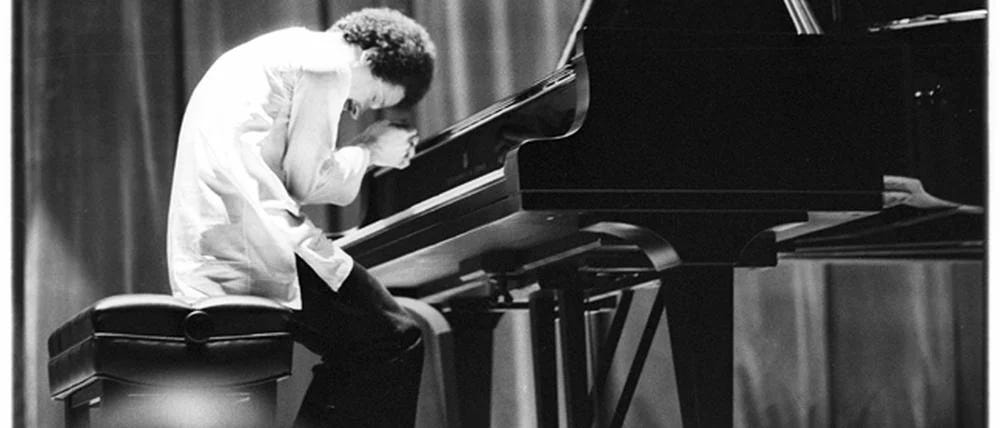
See - Keith Jarrett was a renowned improvisational pianist who came to Köln in 1975 to perform to a sold out theatre.
The circumstances of his performance, however, couldn’t have been less than ideal. His normal piano had not made it to the venue, it was impossible to transport it to the venue given the rainstorm battering the city, and all that was available to play was this rickety, out of tune, partially-working practice piano.
The concert was to start in just a few hours - and Keith himself was also worse for wear, having not slept in several nights due to back pain, arriving at the venue after an exhausting drive, and woefully underfed.
Somehow, the concert promoter - then only 18 years old, convinced him to stay, and the result was magic.
See, the confluence of circumstances forced Keith to adapt and play in a totally unique way, standing on his toes to hammer sound out of the weak keys, dancing around and over broken or stuck notes, focusing on the middle portion of the keyboard - even groaning in pain and disappointment during his performance.
All captured on audio. All leading to this concert becoming the best-selling solo album in jazz history.
Think of all the people who had the worst day of their lives that morning in 1975. The concert producer, the piano tuner - Keith himself, none of them realizing that the second half of the story was going to write history.
Aya’s rough presentation was their “worst morning”, but the second half of the story wasn’t written - yet.
Ultimately, Aya didn’t revise their original presentation. Instead, a few weeks later, a new opportunity emerged. We were asked to present at our year-end All Hands, in front of 700 people.
A six-hour long marathon of different parts of the company showing off their accomplishments. The audience was getting restless, starting to multitask, zoom fatigue - you know the deal.
Then, Aya came on - and I’m not sure how else to describe it, Aya & the team “won” the All Hands.
A stream of emojis flooded the screen, supportive messages scrolled past on the Zoom chat, inboxes and Slack channels clogged with DMs.
After the All Hands, the team’s presentation was all anyone could remember. And I’m confident, without Aya’s “worst morning”, the second half of this story would not have happened how it did.
We’re not all concert winning pianists, but we are all human - and that means we are going to make mistakes. And while your last mistake may not produce the best-selling jazz album of all time, it might still be the first half of a story worth finishing.
Couldn't agree more; your point about the difficulty of embracing mistakes as accountability grows resonates deeply, as fostering a true "learn-it-all" culture feels essensial for both personal growth and the ethical advancement of complex systems like AI.